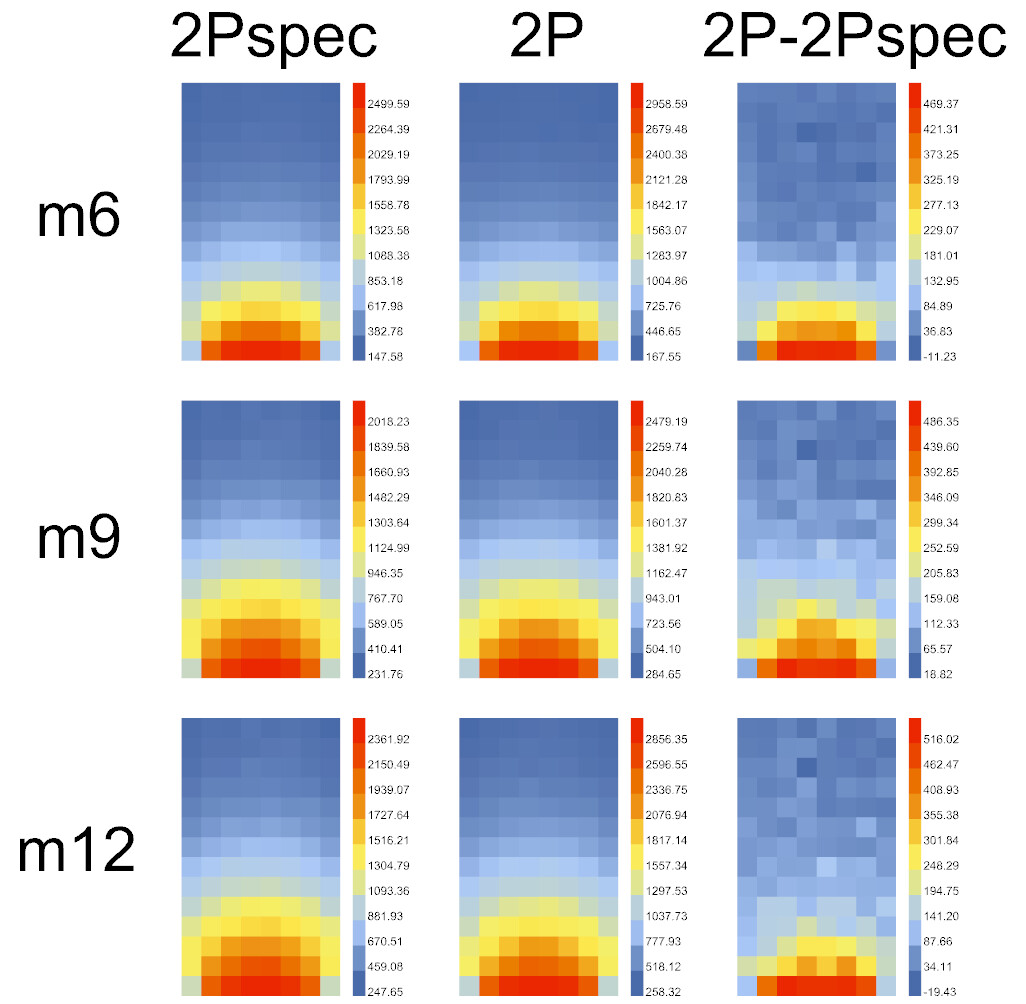
Hello,
I am relatively new to the world of Radiance and am currently learning and testing its commands. I have encountered an issue in the spectral matrix simulation section, and I would greatly appreciate any guidance on what I might be doing wrong.
As a first step, I followed the matrix simulation commands based on Subramanian’s tutorial. To ensure that I was proceeding correctly, I compared my results with Honeybee’s two-phase output (without DDS), and the results seemed consistent, suggesting that I had followed the process correctly.
However, when I attempted to extend this approach to the spectral mode, the results were significantly different from the non-spectral case. The results for month 6 (12:00 during the summer solstice) are somewhat acceptable, but for month 9 (equinox) and month 12 (winter solstice), the results appear to be completely incorrect.(Even 500 times larger. In the third row, I divided the results) The light distribution pattern itself seems reasonable.
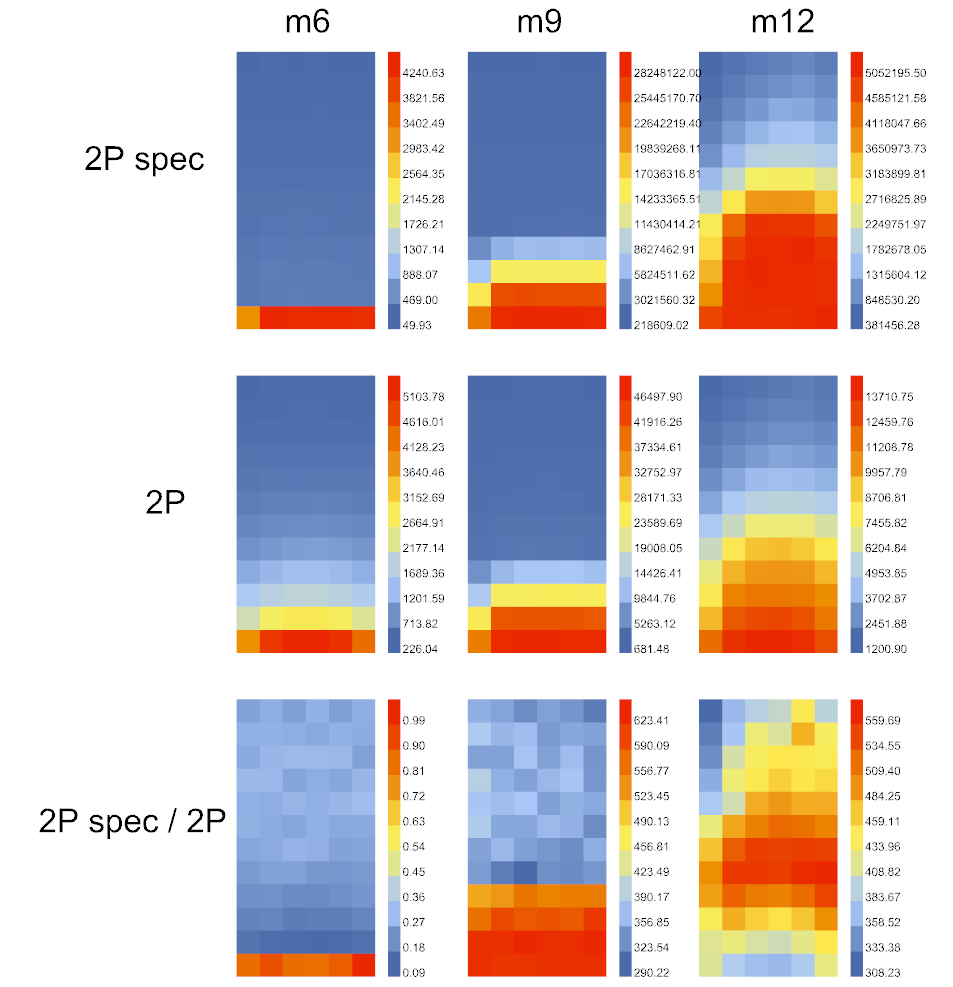
Mat file:
void glass generic_exterior_window_vis_0.64
0
0
3 0.697576181538 0.697576181538 0.697576181538
void plastic OpaqueMaterial_f95cbb3c
0
0
5 0.2 0.2 0.2 0.0 0.0
void plastic generic_wall_0.50
0
0
5 0.5 0.5 0.5 0.0 0.0
void plastic generic_floor_0.20
0
0
5 0.2 0.2 0.2 0.0 0.0
void plastic generic_ceiling_0.80
0
0
5 0.8 0.8 0.8 0.0 0.0
Rad file:
generic_exterior_window_vis_0.64 polygon Room_1_915d0f9b…Face2_Glz0
0
0
12 0.5 0.0 0.8 3.5 0.0 0.8 3.5 0.0 2.8 0.5 0.0 2.8
generic_wall_0.50 polygon Room_1_915d0f9b…Face0
0
0
12 4.0 7.0 0.0 0.0 7.0 0.0 0.0 7.0 3.0 4.0 7.0 3.0
generic_wall_0.50 polygon Room_1_915d0f9b…Face1
0
0
12 0.0 7.0 0.0 0.0 0.0 0.0 0.0 0.0 3.0 0.0 7.0 3.0
generic_wall_0.50 polygon Room_1_915d0f9b…Face2
0
0
30 0.0 0.0 0.0 4.0 0.0 0.0 4.0 0.0 3.0 0.0 0.0 3.0 0.5 0.0 2.8 3.5 0.0 2.8 3.5 0.0 0.8 0.5 0.0 0.8 0.5 0.0 2.8 0.0 0.0 3.0
generic_wall_0.50 polygon Room_1_915d0f9b…Face3
0
0
12 4.0 0.0 0.0 4.0 7.0 0.0 4.0 7.0 3.0 4.0 0.0 3.0
generic_floor_0.20 polygon Room_1_915d0f9b…Face4
0
0
12 4.0 7.0 0.0 4.0 0.0 0.0 0.0 0.0 0.0 0.0 7.0 0.0
generic_ceiling_0.80 polygon Room_1_915d0f9b…Face5
0
0
12 4.0 7.0 3.0 0.0 7.0 3.0 0.0 0.0 3.0 4.0 0.0 3.0
OpaqueMaterial_f95cbb3c polygon Face_9d03db89
0
0
12 -27.9890382800 33.0517613807 0.0 -27.9890382800 -27.0423502206 0.0 31.8581112187 -27.0423502206 0.0 31.8581112187 33.0517613807 0.0
DC_sky:
#@rfluxmtx u=+Y h=u
void glow groundglow
0
0
4 1 1 1 0
groundglow source ground
0
0
4 0 0 -1 180
#@rfluxmtx u=+Y h=r1
void glow skyglow
0
0
4 1 1 1 0
skyglow source skydome
0
0
4 0 0 1 180
And rfluxmtx:
0. gensdaymtx -n 8 test.epw > SDM.mtx
- oconv m.mat r.rad > model.oct
- type p.pts | rfluxmtx -I+ -y 72 -ab 6 -ad 25000 -as 4096 -c 1 -dc 0.75 -dp 512 -dr 3 -ds 0.05 -dt 0.15 -lr 8 -lw 4e-07 -ss 1 -st 0.15 -cs 20 - dc_sky.rad -i model.oct > DC.mtx
- rcomb -fa -h DC.mtx -m SDM.mtx -c Y > lux.mtx